Discover Beauty, Self-Care & Everyday Essentials You’ll Love💖Shop our latest arrivals HERE✨


Best body lotions for uneven skin tone in Nigeria (2026)

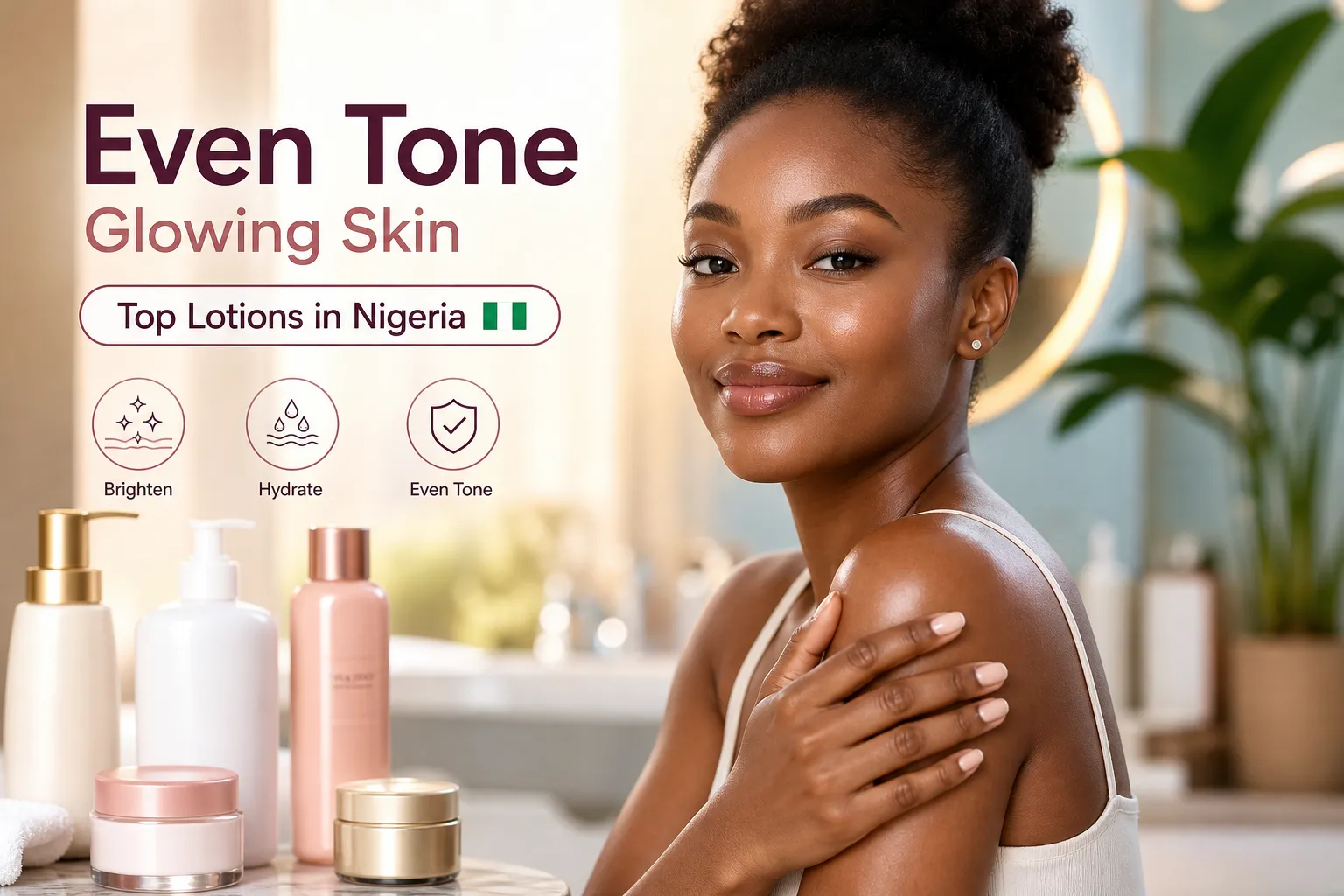
Dark elbows. Patchy knees. Arms that look two shades uneven in certain lighting. A torso that never quite matches the glow on your face. If you have been searching for body lotions for uneven skin tone that actually work on melanin-rich skin, this guide cuts straight to what does, and what does not. Uneven skin tone on the body is one of the most common concerns for Nigerian women, yet the average beauty aisle is stocked with products formulated for skin types that look nothing like ours.
You will find the right active ingredients to look for, a curated list of brightening body moisturisers available in Nigeria, and a daily routine that layers actives and sun protection for visible results.
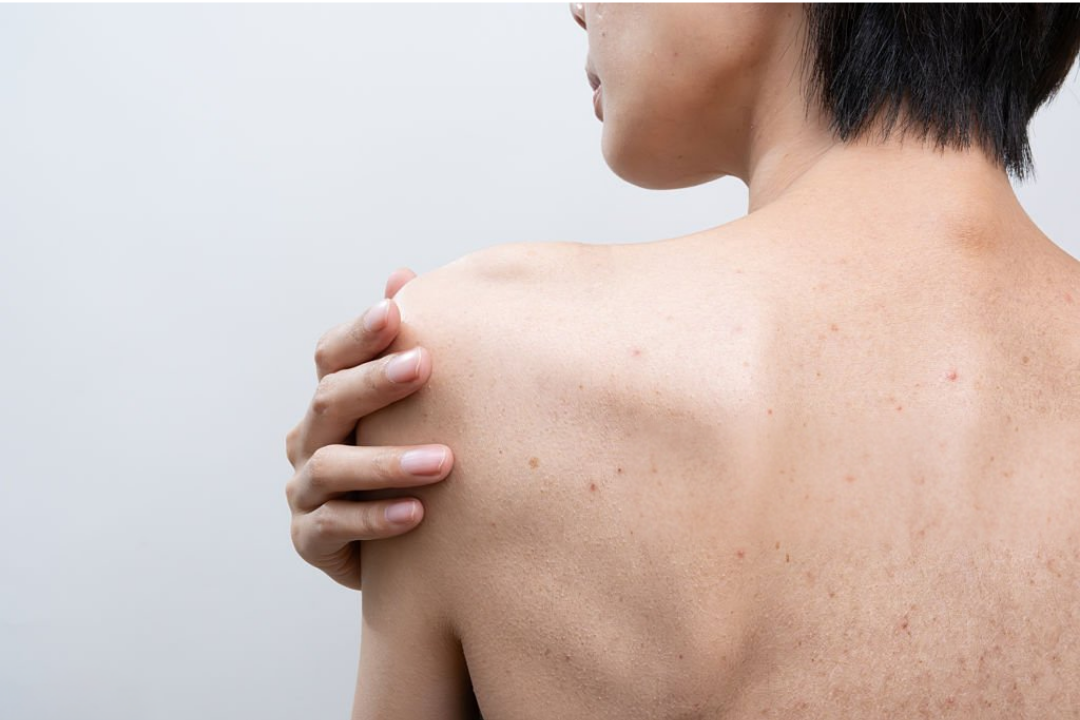
Image credit: iStockphoto
Why melanin-rich skin is more prone to uneven body tone
The science of melanin and pigment disruption
Darker skin has more active melanocytes, the cells that produce melanin. This is a natural advantage in many ways, but it also means any disruption to the skin can trigger excess pigment production quite readily.
Friction, inflammation, or hormonal shifts can signal melanocytes to produce more colour, and the result shows up as dark patches that linger long after the original trigger is gone. The location of that pigmentation matters too: surface-level discolouration fades faster than pigment that has settled deeper in the dermis, which is why some dark marks respond to a body lotion within weeks while others require months of consistent use.
Common culprits behind dark patches on Nigerian skin
Post-inflammatory hyperpigmentation from ingrown hairs and shaving is one of the most frequent causes of dark marks, especially on the underarms, bikini line, and legs. Friction on the knees, elbows, inner thighs, and ankles gradually darkens skin over time, often without the person noticing until the contrast becomes obvious.
Sun exposure without protection accelerates pigmentation on exposed skin, and Nigeria’s climate means UV exposure is constant, not seasonal. Hormonal shifts from pregnancy, contraception, or menstrual cycles can also trigger melanin overproduction across large areas of the body. All of these triggers point to the same conclusion: the ingredients in your body lotion for uneven skin tone need to be chosen deliberately, not randomly.
Active ingredients that genuinely fade dark patches on the body
1. Niacinamide and alpha-arbutin: the gentle, reliable brightening duo
Niacinamide at 4 to 5% is the most clinically supported brightening ingredient for darker skin. It works by reducing melanosome transfer, the process by which melanin moves from pigment-producing cells into surrounding skin cells.
Published dermatological trials show that 4% niacinamide significantly inhibits that transfer, with one study finding results approaching those of hydroquinone without the associated risks.
Observed reductions vary by concentration and formulation, so results differ between products. Alpha-arbutin at 1 to 2% complements niacinamide well by suppressing melanin formation at the source through tyrosinase inhibition. Both ingredients are well-tolerated on deeper skin tones, which is a critical advantage: inflammation makes hyperpigmentation worse on melanin-rich skin, so any ingredient that causes irritation can set your progress back instead of pushing it forward.
2. Kojic acid and vitamin C: targeting existing discolouration
Kojic acid at 1 to 2% in leave-on formulas is a reliable tyrosinase blocker with a strong track record on post-inflammatory hyperpigmentation. It tends to work faster than alpha-arbutin but carries a slightly higher risk of irritation, so it suits skin that is not particularly sensitive.
Vitamin C derivatives used in body lotions protect skin from oxidative triggers while supporting a brighter, more even complexion over time. For Nigeria’s humid tropical climate, the most stable derivatives are tetrahexyldecyl ascorbate and 3-O-ethyl ascorbic acid, both of which hold up in heat and humidity far better than pure L-ascorbic acid. Vitamin C’s effectiveness in a body lotion depends heavily on which derivative it uses and how the formula is preserved, so check the label before assuming all vitamin C body lotions perform equally.
3. AHAs (glycolic and lactic acid): resurfacing for faster results
Alpha hydroxy acids at 5 to 12% in leave-on body lotions exfoliate the top layer of skin, accelerate cell turnover, and help fade surface-level dark marks faster than pigment inhibitors alone.
They also improve overall skin texture, so the skin looks and feels smoother as the tone evens out. Use AHA-containing lotions in the evening to avoid photosensitivity, and keep in mind they make other brightening ingredients more effective by clearing away dull, dead skin cells that would otherwise block absorption.
For women dealing with particularly resistant patches, pairing an AHA lotion with a dedicated body fade cream for hyperpigmentation can accelerate results more than either product would achieve alone.
Top body lotions for uneven skin tone to buy in Nigeria right now
Budget picks under ₦15,000
- Face Facts Kojic Acid Body Lotion (₦7,500) is driven by kojic acid and suits women dealing with stubborn dark patches on the knees, elbows, and underarms. It has a straightforward formula without much added complexity, making it easy to layer with other products.

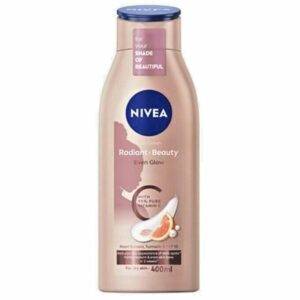
2. Nivea Radiant and Beauty Even Glow Body Lotion (₦6,800) is widely available, with a lightweight texture that absorbs well without feeling greasy and works well for daily use on the arms and legs.
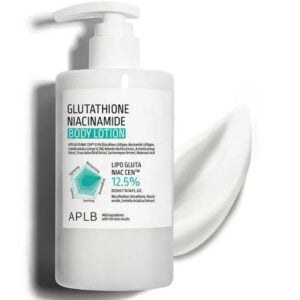
3. APLB Glutathione Niacinamide Body Lotion (₦12,500) pairs glutathione with niacinamide for a gentler brightening approach; it suits women who prefer a mild anti-dark spot body moisturiser they can use consistently without worrying about sensitivity.
Mid-range picks in the ₦15,000 to ₦20,000 range
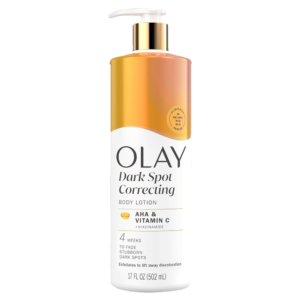
1. Olay Dark Spot Correcting Body Lotion (₦17,500) is a well-regarded option for widespread body discolouration, combining brightening and exfoliating ingredients in one step.
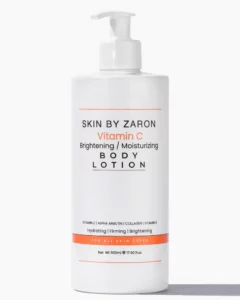
2. Skin by Zaron Vitamin C Brightening Body Lotion (₦16,780) is a locally relevant pick that makes vitamin C accessible without importing a product.
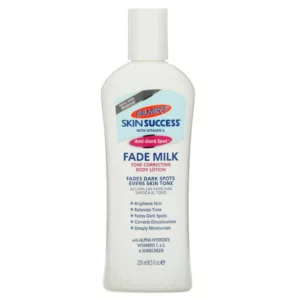
4. Palmer’s Skin Success Anti-Dark Spot Fade Milk (₦15,000) has a decades-long track record on melanin-rich skin and remains a dependable staple for fading dark marks on both the face and body.
Where to shop without the guesswork
Browsing mainstream retailers for body lotions for uneven skin tone often means sifting through hundreds of options with no indication of which ones were formulated with deeper skin tones in mind. Girly Essentials removes that step. The selection has been curated with a single filter in mind: does this product actually work for melanin-rich skin? Instead of spending an afternoon researching, you can shop a shortlist already vetted for women who look like you.
How to apply body lotions for uneven skin tone for real results
Morning routine: application order and sunscreen layering
After showering, pat your skin until it is almost dry, not completely dry. Slightly damp skin absorbs active ingredients more efficiently than bone-dry skin.
Apply your brightening body moisturizer in upward, circular motions, paying extra attention to dark patches on the knees, elbows, ankles, and underarms. Let it absorb for a few minutes, then apply a broad-spectrum SPF 30 or higher sunscreen to any exposed areas. Skipping sunscreen while using brightening actives in Nigeria’s climate does not just slow your results; it can actively worsen pigmentation by exposing sensitised skin to UV radiation.
Evening routine and where exfoliation fits in
Apply your lotion again in the evening if the formula is well tolerated, and prioritise AHA-containing options for this step to reduce photosensitivity. Add gentle exfoliation 1 to 3 times a week with a body scrub or exfoliating mitt to help active ingredients penetrate more effectively. Give extra attention to the friction zones: knees, elbows, ankles, underarms, and inner thighs. One important caution: resist the urge to over-exfoliate. On darker skin, irritation from over-exfoliating triggers inflammation, and inflammation triggers more pigmentation, the exact outcome you are trying to reverse.
Safety considerations every Nigerian woman should know before buying
Ingredients to avoid on deeper skin tones
Three categories of ingredients carry real risk for darker skin tones.
- Mercury, found in many unlabelled bleaching creams sold informally, causes kidney damage, neurological harm including tremors and memory loss, and skin discolouration with prolonged use. High-dose hydroquinone used without medical supervision is linked to exogenous ochronosis, a blue-black and often irreversible darkening that is more common in people with darker skin tones; this risk is well documented, not theoretical.
- Potent topical steroids in body lotions, used long-term over large body areas, cause skin thinning, increase infection risk, and can be absorbed systemically.
The broader principle to remember is this: any ingredient that irritates the skin can worsen hyperpigmentation on melanin-rich skin because of the inflammation-pigmentation cycle. Harsh formulas promise fast results but often produce paradoxical darkening, which takes far longer to reverse than the original marks. Stick to the evidence-backed actives at standard concentrations: niacinamide at 4 to 5%, kojic acid at 1 to 2%, alpha-arbutin at 1 to 2%, and AHAs at 5 to 12%.
How to patch-test and recognise warning signs
Before applying any new body lotion fully, patch-test on a small area of the inner arm or behind the knee for three to five days. Apply a small amount once daily and watch for reactions.
Stop immediately if you notice burning that does not settle within minutes of application, a rash, itching, worsening dark marks, or any unusual discolouration at the test site. Well-formulated products with niacinamide, alpha-arbutin, or kojic acid at standard concentrations are generally safe for consistent use, but every individual’s skin responds differently, and a patch test takes very little time compared to managing a reaction over a larger body area.
How long before you see a visible difference
A realistic 12-week timeline
Set your expectations before you start, because body hyperpigmentation heals more slowly than facial skin. Early changes, usually a subtle reduction in dullness and improved skin texture, typically start around four to six weeks of consistent daily use. Dark patches usually fade noticeably between eight and twelve weeks.
Deeper or older pigmentation, the kind that has been present for years, can take three to six months to show significant improvement. Body skin is thicker than facial skin, so absorption is slower, and cell turnover takes longer, which means patience isn’t optional. If you are also interested in a body serum for uneven skin tone, these timelines apply equally: no topical product, regardless of format, bypasses the skin’s natural renewal cycle.
Signs your routine is working and when to adjust
Progress shows up as improved texture first, then a reduced contrast between dark patches and surrounding skin, then a more even overall tone across the body. If no change is visible at twelve weeks, evaluate these variables before switching products entirely:
- Are you applying sunscreen consistently to exposed areas every morning?
- Are the active concentrations in the chosen product high enough for the severity of pigmentation?
- Have you incorporated gentle exfoliation one to three times per week?
If the answer to any of those questions is no, address that gap first. Sunscreen adherence, sufficient active concentrations, and regular exfoliation are the variables most within your control, and the most likely explanation for a stalled routine. Reaching for a stronger product before fixing the basics is usually not the answer.
Start where you know the products have been chosen for you
You now have a clear picture of what to look for: niacinamide and alpha-arbutin for daily pigment suppression, kojic acid for more stubborn patches, AHAs for resurfacing, and vitamin C derivatives stable enough to survive Nigeria’s humidity. You know which body lotions for uneven skin tone are available right now and what they cost, and you have a morning and evening routine that gives those actives the best possible conditions to work.
Results on deeper skin tones take consistency, not aggression. The most effective approach is a well-formulated product applied daily, paired with sunscreen every morning and gentle exfoliation a few times a week. Over two to three months, that combination delivers real, visible change without the risks of harsh bleaching creams.
When you are ready to shop, head to the Girly Essentials skincare store. The body lotions for uneven skin tone stocked there are already filtered for melanin-rich skin, so you can spend less time reading labels and more time actually seeing the results you have been working toward.
